Monday, June 24, 2013

Bubbler revival!

How long since you've sipped from a bubbler? Possibly not since school!? 

Let's bring them back. They make sense.

We all know that plastic drinking bottles are the bane of our generation. Their life span is very short before they end up in landfill for a very long time. You could re-use them, but then you could be consuming the plastic compounds which may have leached into the water, and there's lots of reasons why you don't want to do that. There's also the issue of bottled water being expensive - If you're going to buy a drink in a plastic bottle it's probably the best choice for your health. But I don't think we should have to!

Of course there's the option to fill your own stainless steel bottle and take with you. This is very sensible and seems to work for a lot of people. It's reusable, there's none of the issues associated with eating and drinking from plastic, and it's free once you've bought the bottle. 
However it is just another thing to purchase, to remember to take when you go out, to carry around with you throughout the day and to store in the kitchen cupboards. And at some point in time - another thing to throw out.

If you look for them, there are bubblers around. Have a look at this bubbler project here in Sydney. There are some lovely old ornate bubblers which shows they were readily used in the past - I'm guessing our slight obsession with hygiene made them less appealing for some time.

I have probably noticed this more since living in Sydney. In Yamba I was never far from home or from a familiar shop or cafe where I could always ask for a glass of water! I'm noticing and appreciating the public/community facilities and fixtures here. Beautiful parks and well-equipped libraries as well as the bubblers.

I love the idea behind this Sydney Water campaign. It encourages Sydney-siders to choose tap water over bottled. It even has an option to search for cafes that serve tap water.

Easy! No harmful toxins, less plastic in land fill, free and convenient.


Sunday, June 23, 2013

Coconut Bread with Coconut Butter Icing


Coconut Bread with Coconut Butter Icing

After many years of getting such a bad rap, coconuts are now one of the superstars of the health food world. Their high percentage of saturated fat was the main reason they were considered unhealthy. 
However these same medium-chain saturated fats are the reason you should include coconut in your diet. Coconuts contain lauric acid, an essential fatty acid that enhances the immune system. They also contain calcium, iron and magnesium. The nourishing fats keep you full and can help to keep sugar cravings at bay. Hopefully you are all well and truly past the 'low fat' phase and embrace the nourishing fats in coconuts.
And of course - health benefits aside, eat them because they are delicious!

Coconut oil is ideal to cook with, as it has a high smoke point and doesn't change structure with heat. I often use this one. It is fair trade from Papua New Guinea and a the jar is very handy to re use once you've finished it.

Using coconut flour results in a more rustic, dense texture as opposed to light and fluffy. It soaks up a lot of liquid and little bit goes a long way. Coconut flour is simply dried and ground coconut pulp left over from making coconut milk. 

I sweetened this one with brown rice syrup, but you could use coconut sugar or honey (but remember heating raw honey means you lose it's health benefits). You could even leave out the sweetener and use it more as a bread than a sweet loaf. This would be delicious toasted and served with butter, ghee or coconut butter.

The icing is based on coconut butter. This is simply shredded coconut blended into a paste. You can use the coconut butter alone, but I added a little coconut cream to make the texture a little more smooth. It doesn't really need to be sweetened as it already has its own sweetness. However add a little raw honey if you prefer it sweeter. If it's cold, the icing will set slightly which is nice!

Coconut bread
3/4 cup of coconut flour
1/2 teaspoon of baking powder 
1/2 cup of coconut oil
6 eggs. Use free range from pasture fed hens.
1/2 tablespoon of brown rice syrup or coconut sugar
A pinch of salt

Coconut butter icing
A bag of shredded coconut
1/2 cup of coconut cream or coconut milk
Seeds of a vanilla bean or a small pinch of vanilla powder
Some raw honey to taste if desired

Preheat the oven to 180C.

Place the coconut flour and baking powder into a bowl and combine.
In a separate bowl, beat the eggs, coconut oil, brown rice syrup and salt.
Stir the dry ingredients into the wet ingredients.
Pour into a loaf tin lined with baking paper and cook at 180C for about 40 minutes.

While the loaf is cooking, make the icing.
To make the coconut icing, you need a pretty strong blender. A high speed blender like a Vita-mix is ideal. It will still work in a regular blender but will take a little longer and may not be quite so smooth. It is still delicious with a bit of a rough texture.

This works best to use the whole packet of shredded coconut in the blender as it needs to be quite full. Set the blender at its highest speed and blend until it has become a creamy consistency. It could take well over 10 minutes so be patient!
Once smooth enough for your liking, add the coconut milk/cream, vanilla and honey (if using) and whizz again to combine.

Once the loaf has cooled a little, pour the icing over and serve.

Thursday, June 20, 2013

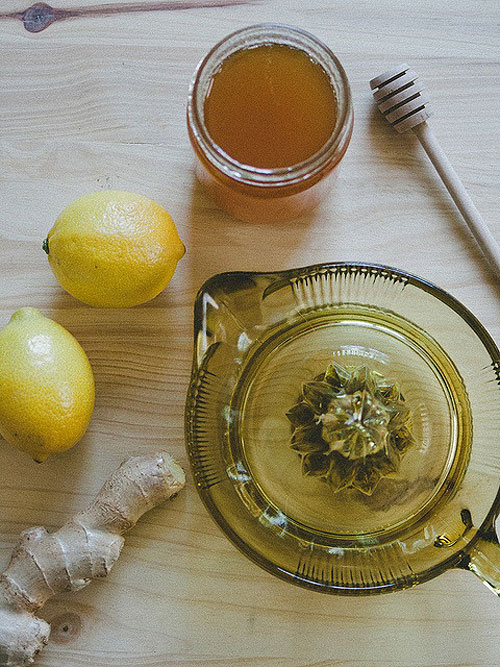
Lemon, ginger and honey tea

 
Image sourced from Old Brand New

Do this first thing in the morning: Sip a large glass of lemon, ginger and honey tea.
It is such a simple addition to add to your morning routine. It has many benefits, especially during winter. Lemon, ginger and honey tea is recommended to use as a remedy against common colds.

Lemon.
Lemon stimulates the lymphatic system so assists in removing toxins. They are also are high in minerals and vitamins and help loosen ama, or toxins, in the digestive tract. Lemon also stimulates the liver to produce bile which optimizes digestion.

Ginger.
Ginger is anti-inflammatory and helps to dissolve mucous. It is warming, so particularly relevant to consume during winter. It enhances blood flow throughout the body by stimulating the heart and circulation. It is also said to encourage the secretion of digestive enzymes.

Raw honey.
It is important to choose raw honey as opposed to supermarket honey which has been heated at high temperatures during processing. Raw honey deserves its very own post (coming soon), but to cut it short, it contains lots of nutrients, as well as amylases which are enzymes that digest carbohydrates. These enzymes are destroyed when processed honey is heated, leaving behind only the sweetness with none of the goodness.
 
How it's done.
This is insanely easy! I'm sure you don't need them but here is some basic instructions if you feel you need...

1. Finely chop or grate a desert spoon of fresh ginger the night before and have it ready in your tea pot or strainer. 
2. Pour over with boiling water and let it sit for a few minutes.
3. Cut a wedge of lemon. Squeeze it into your tea and then drop the wedge in too. 
4. Add a small teaspoon of raw honey and stir.

You can add a little cold water if it's a little too hot to drink immediately. Sit quietly and slowly sip your tea, enjoying the stillness of the early morning.

The Winter solstice

Image sourced from Pinterest

Tomorrow is the Winter solstice. This is the shortest day and the longest night of the year. For some people, the decreased sunshine means feeling a little flat with less energy. However, others relish this time of year to hibernate and settle in for winter. 

The Winter solstice is usually associated with Kapha as it is dark, damp and heavy feeling. 
If you feel heavy and drained of energy, you may find that performing Suyra Namaskara (sun salutations) in the morning energises you for the day. As you move through the salutes, you create a gentle warmth in your body and allow prana to flow. Start with a few slow, mindful salutes until you feel the warmth spread.

We are often a little more introverted and fragile at this time of year. However instead of focusing on the lack of sunshine and your lack of energy, use Winter as a time to turn inward and reflect. Don't fight these feelings - view them lightly as a normal part of the season. 

Look after your body with Abhyanga, which is self massage with warm oil. Eat warming Winter foods and get plenty of sleep (come and learn about Winter food with me!).

Appreciating the Winter solstice is another way to connect with the seasons, nature and your environment.

Tuesday, June 18, 2013

Asana this week: Adho Mukha Svanasana (Downward facing dog)

 
Image sourced from Pinterest

Adho Mukha Svanasana, or down ward facing dog, is an asana many of us are familiar with.
Downward dog is essentially a gentle inversion. BKS Iyengar states that it is a convenient posture to practice for yogis who are not yet ready for stronger inversions, such as a headstand. The upper body is lowered and stretched which allows blood flow to the area without strain on the heart. 

When to do this posture: Downward facing dog is beneficial to do when feeling fatigued. The increased blood flow to the head rejuvenates blood cells and invigorates the brain. It also helps with stiffness around the shoulder blades.

Some points to remember when performing Ardo Mukha Svanasana: If your hamstrings are particularly tight, it is a good idea to slightly bend the knees and lift the heels up off the mat. This will allow your spine to lengthen and straighten. Push the belly towards the thighs. However be aware of sinking the chest if you have a flexible upper spine. Although we are ultimately aiming to press the heels to the floor, it is important not to curve the spine just to straighten your legs and have your heels on the floor. Check that the inside edge of the heel is just out of your sight, so toes ever so slightly turn in.
To open the shoulders and relieve stiffness in this area, turn the under arms towards each other. Imagine you are tightening or spreading the skin between the shoulder blades, as opposed to bunching. Allow the head to hang.
Press the finger tips and palms to the floor, and have the idea of the arms lifting up out of the wrists and the torso lifting up out of the shoulders. Think about lift, or pressing the earth away, rather than sinking the weight towards the floor.

Thursday, June 13, 2013

Cooking class: How to eat for Winter


As the seasons change we also need to change how we eat. Obviously it is most sensible to eat foods that are in season. There's a good reason why they are plentiful at that particular time of the year - it is what your body needs.

During winter our body requires warm, cooked foods. Raw foods are a little too hard to digest as our agni isn't quite as strong when it is cold and damp. Warming spices can also used to assist our digestive fire.

To really immerse yourself in the day, I suggest you sip a tea made from freshly grated ginger, lemon and some raw honey in the morning and wait to have breakfast until you arrive for the class.

Our first recipe will be warm oat, chia & spice porridge to get you going for the day. We will discuss how important it is to soak your grains to ensure optimal digestion and absorption of minerals. We will also add spices such as cinnamon and ginger to warm your belly and excite your taste buds!

We will learn how easy it is to make almond milk. Almond milk is a delicious alternative for those people who find cow’s milk difficult to digest. In my opinion it is a far better product that soy milk, or any other store bought milk replacement. If you do consume cow’s milk, almond milk is still a worthwhile addition to your diet. We will serve the almond milk over our porridge.

After our breakfast we will move on to preparing lunch.

Lunch will be an Ayurvedic dhal made with soaked lentils, grounding winter vegetables and plenty of spices. We will then make gomasio to sprinkle over the dhal and will serve the dhal on brown rice.

Dessert will have to be a surprise...

If you would like to come along, contact Kitchen to Table on 02 6646 1577 to book your place.

Please bring a recycled glass jar or container if you would like to take your dhal home with you. Let's try to eliminate using plastic containers.

Friday 12th July or Saturday 13th July 2013
At Kitchen to Table
Shop 2 / 22 Coldstream Street
Coldstream St Yamba
9.30 until 11.30am
$60 per person
Includes cooking demonstration, food samples, recipes and 10% discount in the store.

Tuesday, June 11, 2013

Yoga classes in July


image sourced from Pinterest

Hello friends!

I am going to be in Yamba in July, so pop these dates in your diary. These classes will be at the Surf Club and will be for one hour.

Monday 8th July 5.30pm
Tuesday 9th July 5.30pm
Wednesday 10th July 5.30pm
Thursday 11th July 6.30am

Looking forward to seeing you then.
Sarah